
 Co-funded by the EU
What It Is
One platform from image upload to signed report
Clinics and imaging centres receive more studies every year while the number of radiologists stays flat. MedVision AI acts as a tireless second reader: every incoming study is de-identified, quality-checked, analysed by the right AI modules and placed in the worklist according to urgency.
Clinicians stay in control. They see heatmaps, segmentations and measurements next to the original image, accept, reject or modify each AI finding, and sign a report that was already drafted for them. Every decision is recorded and feeds back into model monitoring.
Patients get a portal with plain-language results, physicians get alerts for critical findings, administrators get audit trails, SLO dashboards and model governance — all in a multi-tenant SaaS platform that connects to PACS, laboratory systems and hospital identity providers.
Clinical Workflow
From upload to signed report
The platform runs the whole cycle — automatically where it can, with a clinician in the loop where it matters.
Receive the study
Upload DICOM, JPEG or PNG files, receive studies from PACS via DICOMweb, laboratory results via HL7, or let patients upload themselves through the portal.
De-identify
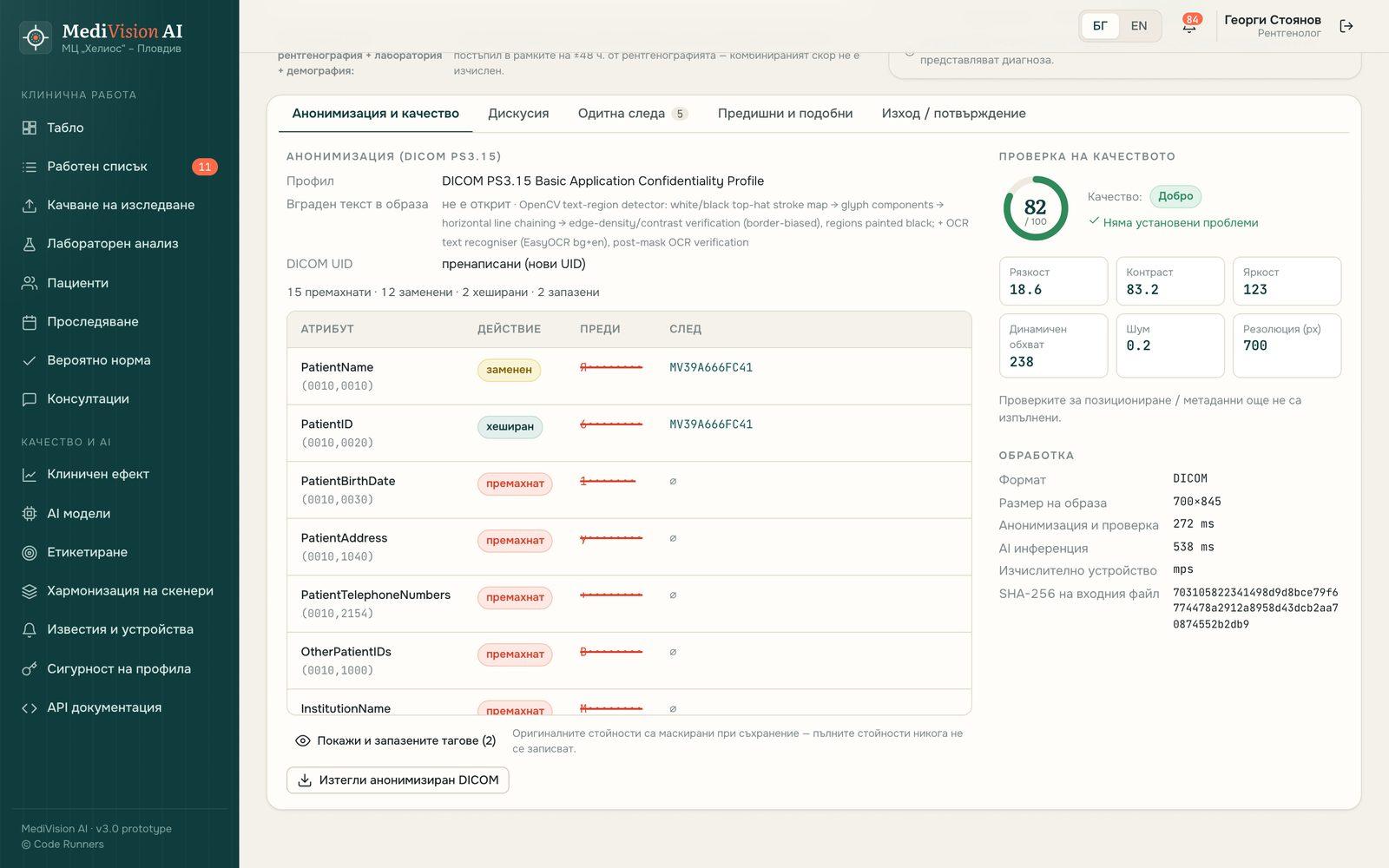
Personal data is removed from tags and from text burned into the pixels. The identity goes into an encrypted vault; clinicians work with a pseudonym and re-identification requires a reason.
Check quality
Sharpness, contrast, exposure and noise are scored before any analysis. Poor images are flagged and the uploader notified; an override is possible and audited.
Analyse with AI
The right modules run for the modality — detection, heatmaps, segmentation, measurements, risk scores — and the study is prioritised in the worklist.
Review and sign
The clinician accepts, rejects or modifies each finding, edits the pre-drafted structured report and signs it digitally with a signature hash.
Share and follow up
Results reach the patient portal as a traffic light, reports export to PDF and FHIR, alerts go to the right doctor, and outcomes feed back into model performance monitoring.
Features
Everything a diagnostic service needs
Twelve capability areas — from the AI modules themselves to the governance that makes them trustworthy.
Multi-Modality AI Modules
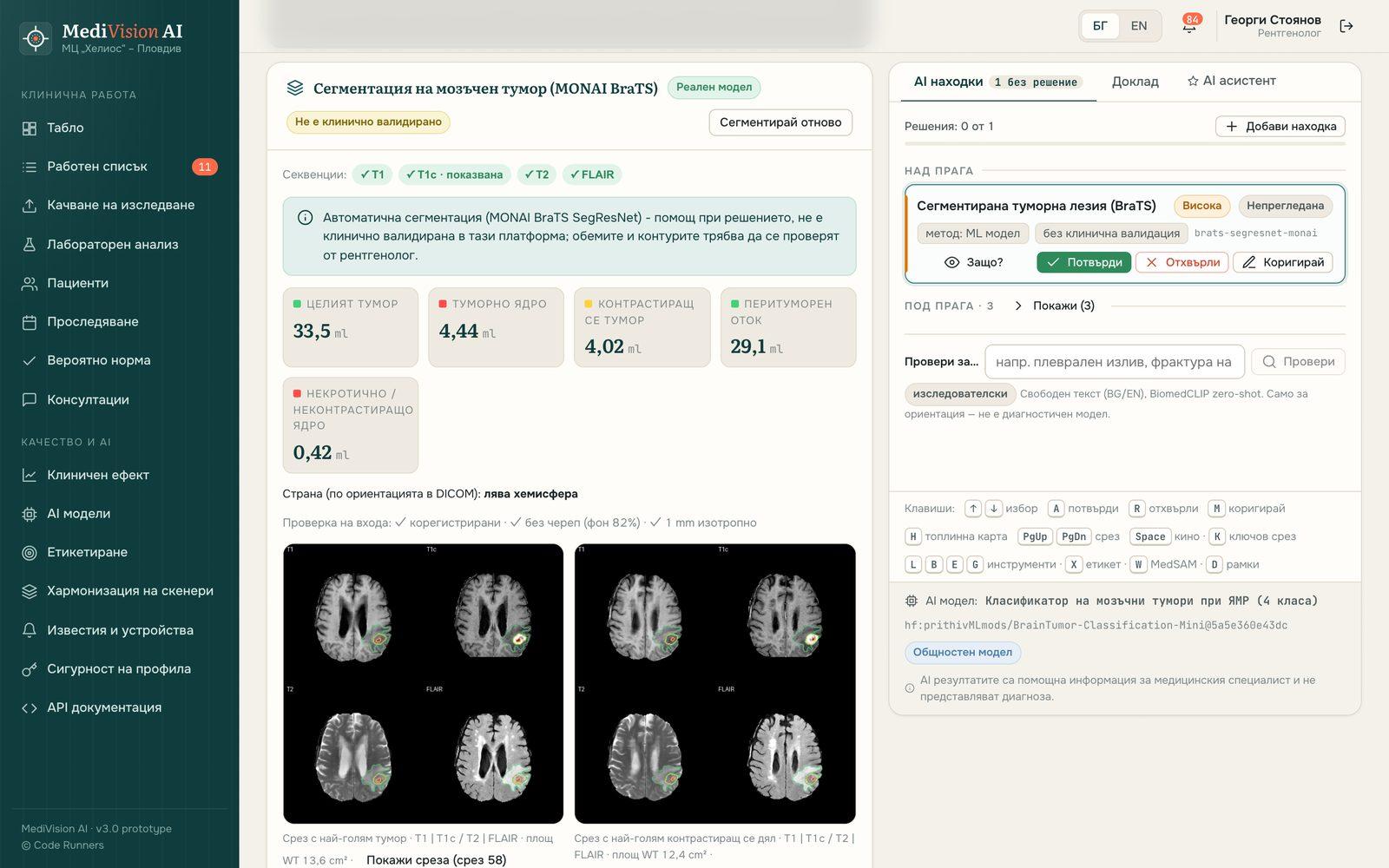
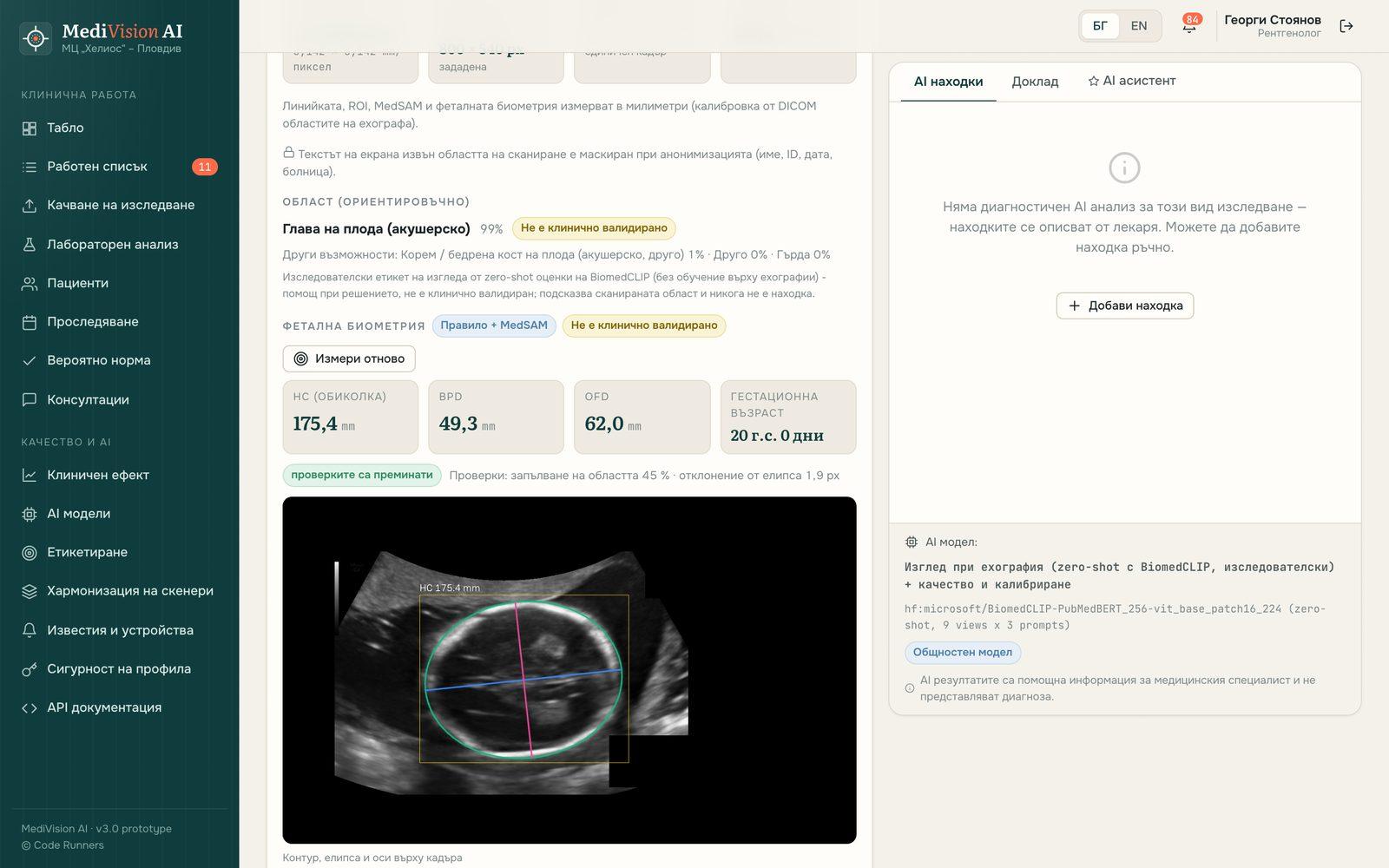
Chest X-ray pathology detection with heatmaps, chest CT and head CT stroke analysis, brain MR volumetry and tumour segmentation, ultrasound measurements and fetal biometry, 12-lead ECG, tuberculosis, blood smear, retina, pathology slides and nodule tracking.
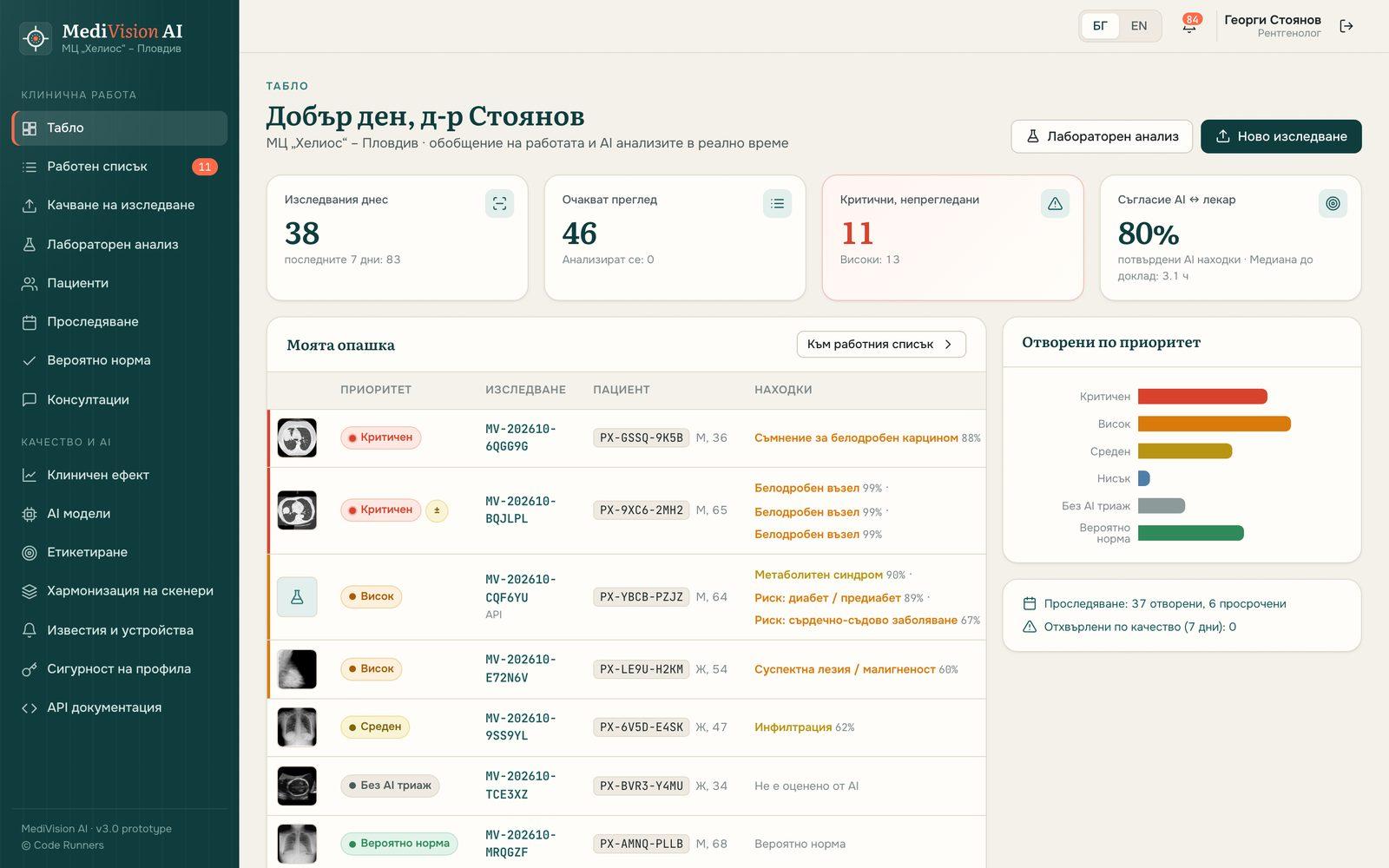
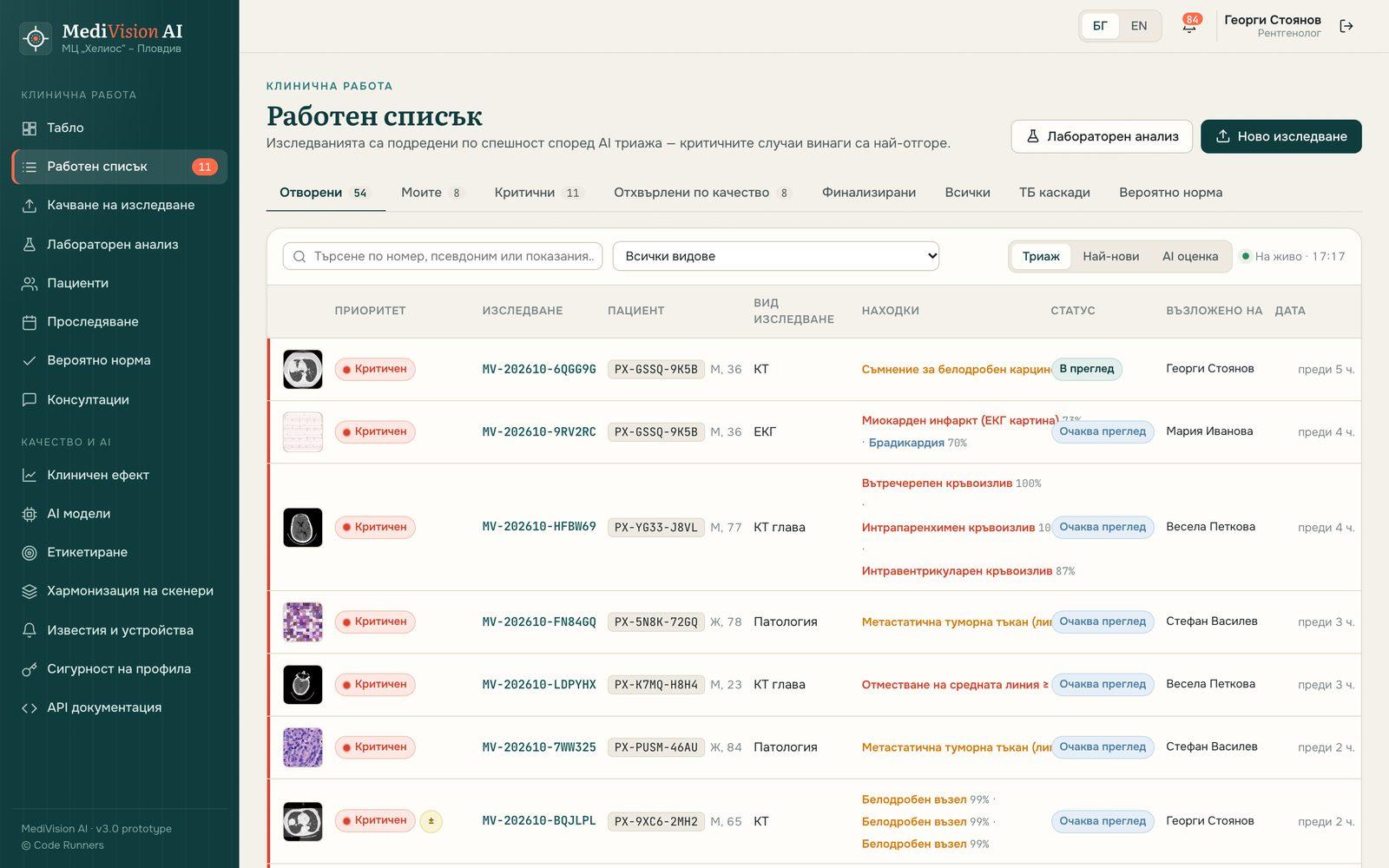
AI-Triaged Worklist
Studies are ordered by AI priority and clinical urgency. Critical findings rise to the top, likely-normal studies go to a fast lane, and each role sees only what it is responsible for.
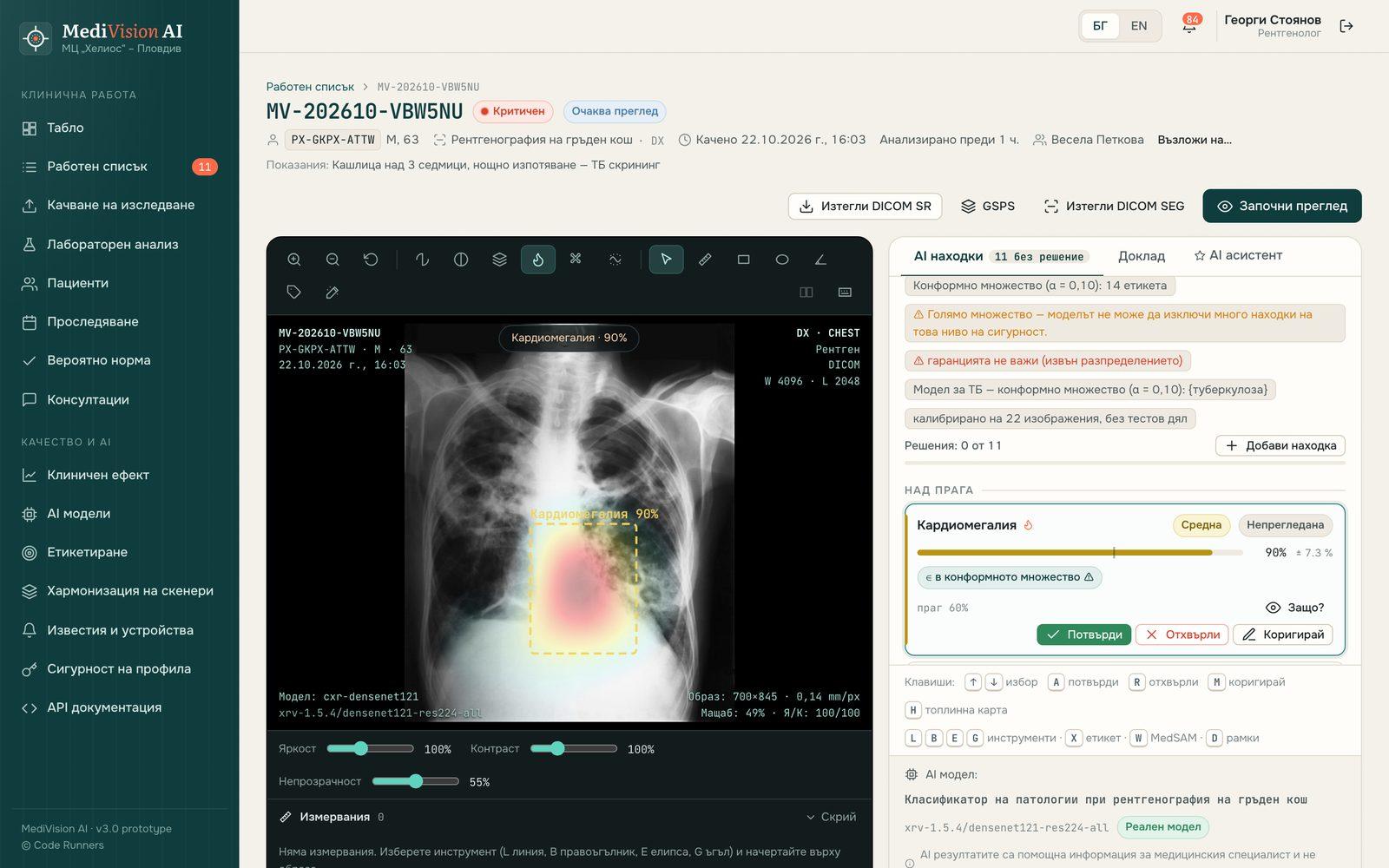
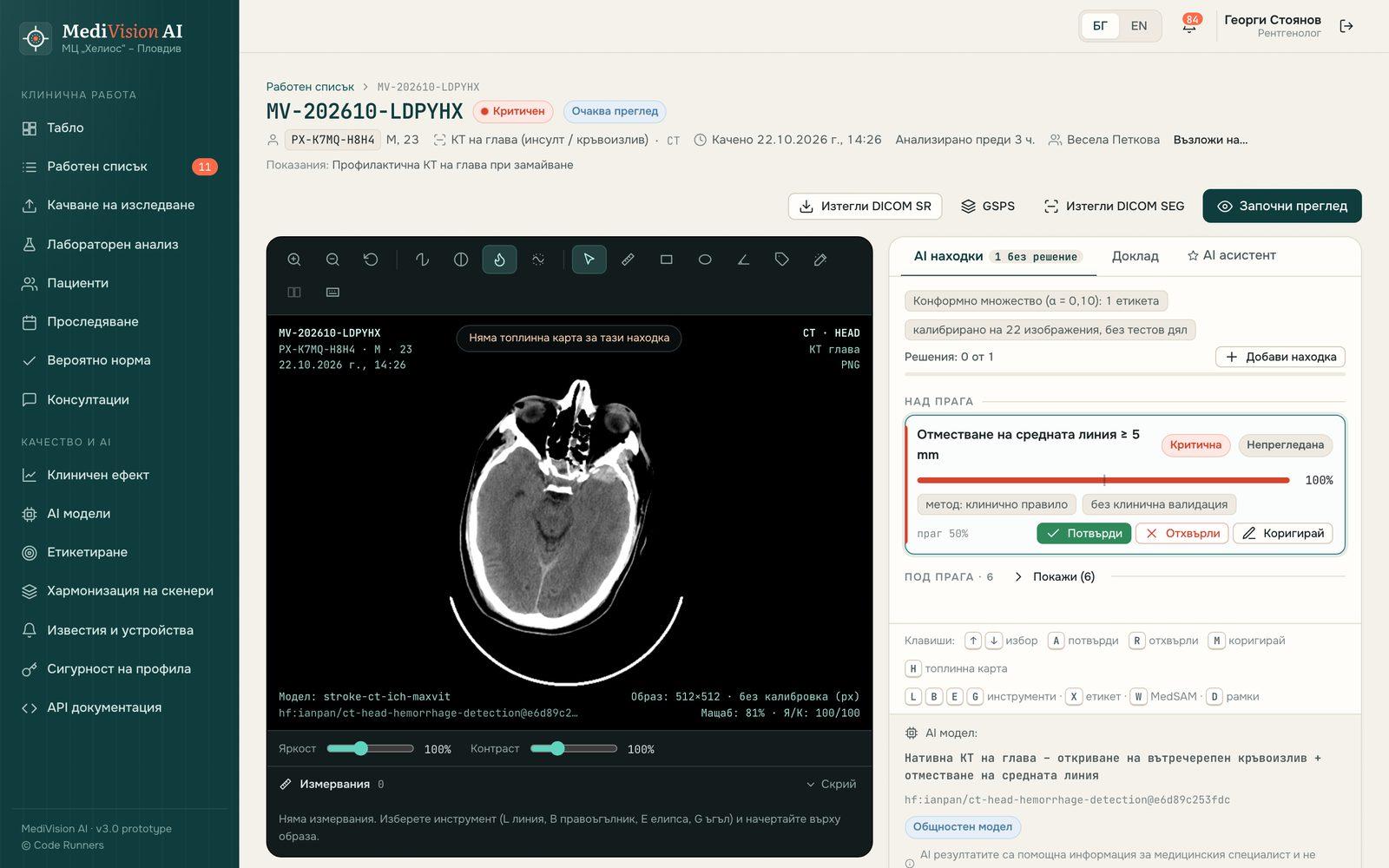
Explainable Study Viewer
Window/level, heatmap, bounding-box and segmentation overlays, measurements in mm and HU, multi-slice series, MIP/3-D, and side-by-side comparison with prior studies.
Structured Reporting & Sign-Off
Pre-drafted reports from the AI findings, a decision with reason code per finding, digital sign-off with signature hash, PDF export, HL7 FHIR R4 DiagnosticReport and DICOM SR/SEG/GSPS objects.
Laboratory Analytics
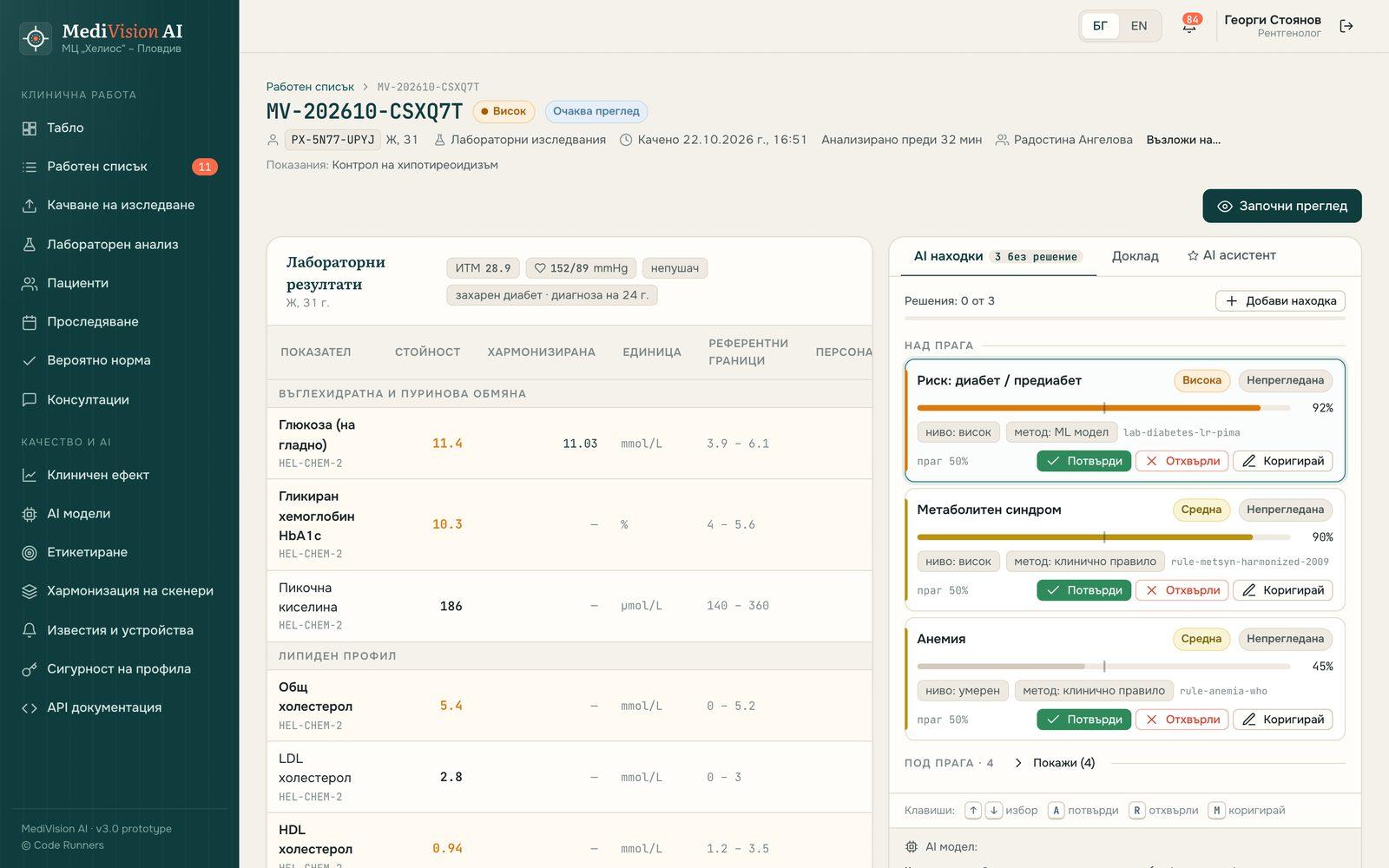
Sex- and age-specific reference ranges, clinical indices such as FIB-4, APRI and eGFR, and machine-learning risk models for diabetes, liver and cardiovascular disease — from manual entry, CSV import or HL7.
De-Identification & Privacy Vault
DICOM PS3.15 profile plus OCR masking of burned-in text, AES-256-GCM encryption of images and identities, re-identification only with a stated reason, GDPR consents, data export and crypto-shredding erasure.
Alerts & Notifications
Rules by severity, finding and confidence route alerts to roles and on-call doctors — in-app in real time, by web push, e-mail and signed webhooks.
Integrations & Open API
DICOMweb STOW/QIDO/WADO for PACS, HL7 v2 over MLLP and HTTP for laboratories, a documented REST API with OpenAPI 3, FHIR R4 export, API keys with scopes and HMAC-signed webhooks.
Model Governance
Model registry with model cards, live performance from clinician decisions and recorded outcomes, drift monitoring, subgroup fairness audits, PCCP-governed updates with automatic rollback and label quality control.
Patient Portal
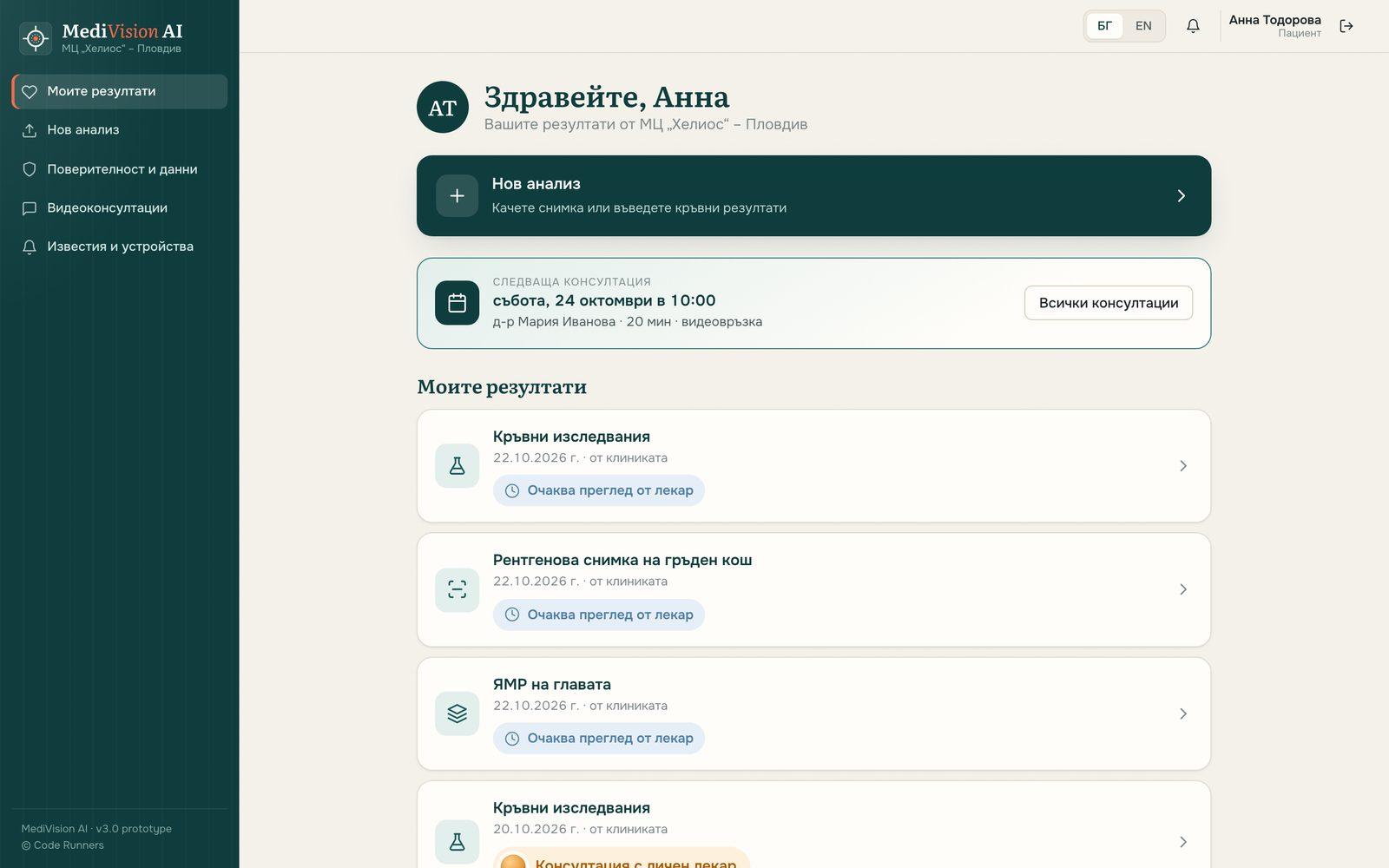
Released results as a traffic light with plain-language explanations, PDF download, self-upload of images, a one-click request for doctor review and booking of video consultations.
Multi-Tenant SaaS Administration
Organisations, users and roles, single sign-on with OpenID Connect and two-factor authentication, plans and quotas, invoices, alert rules, AI thresholds per clinic and a tamper-evident audit trail.
Operations & Monitoring
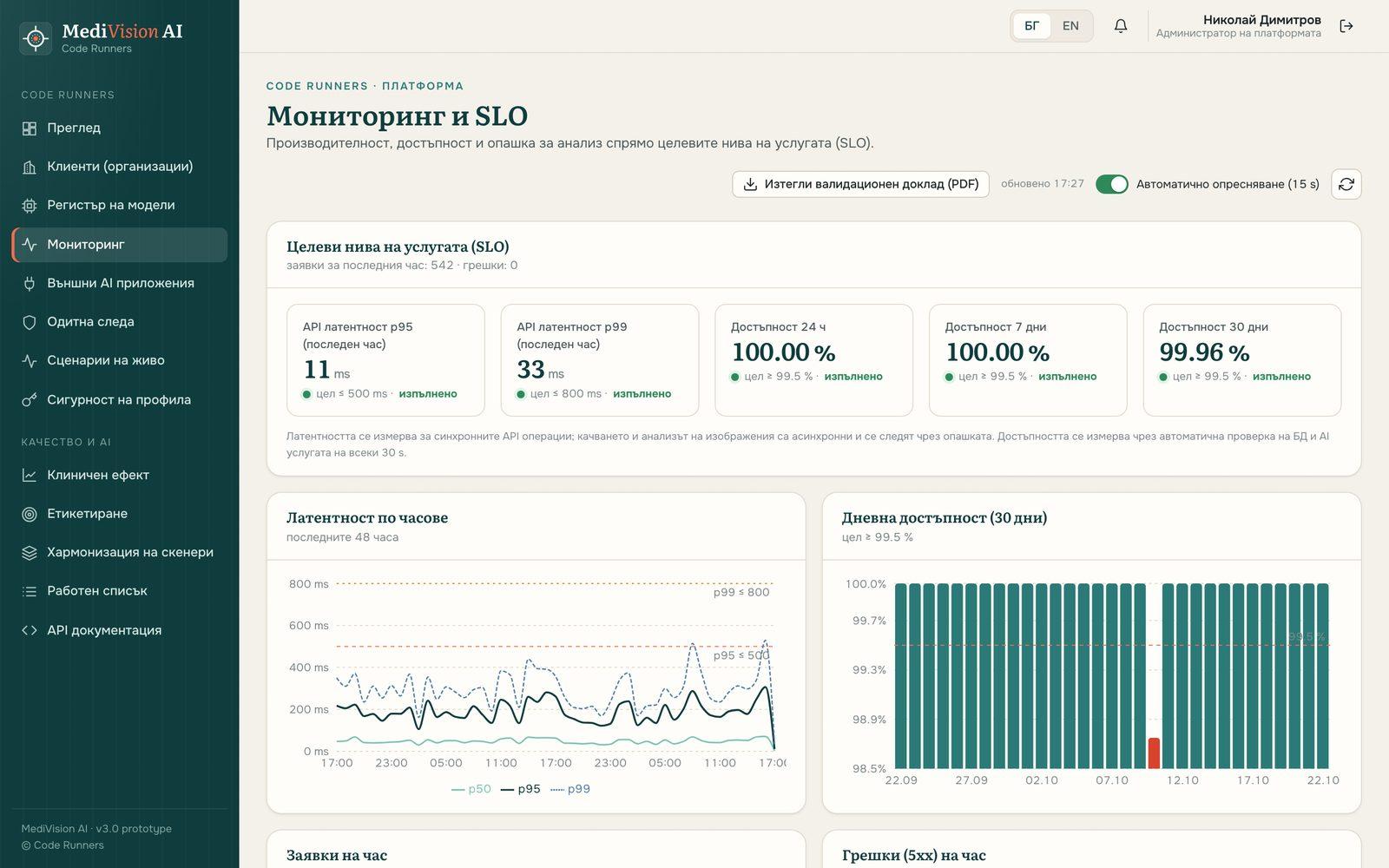
Availability and latency SLO dashboards, a durable job queue with retries and dead-letter view, Prometheus metrics, health endpoints and independent scaling of API, worker and AI inference tiers.
Inside the Platform
A look at the system
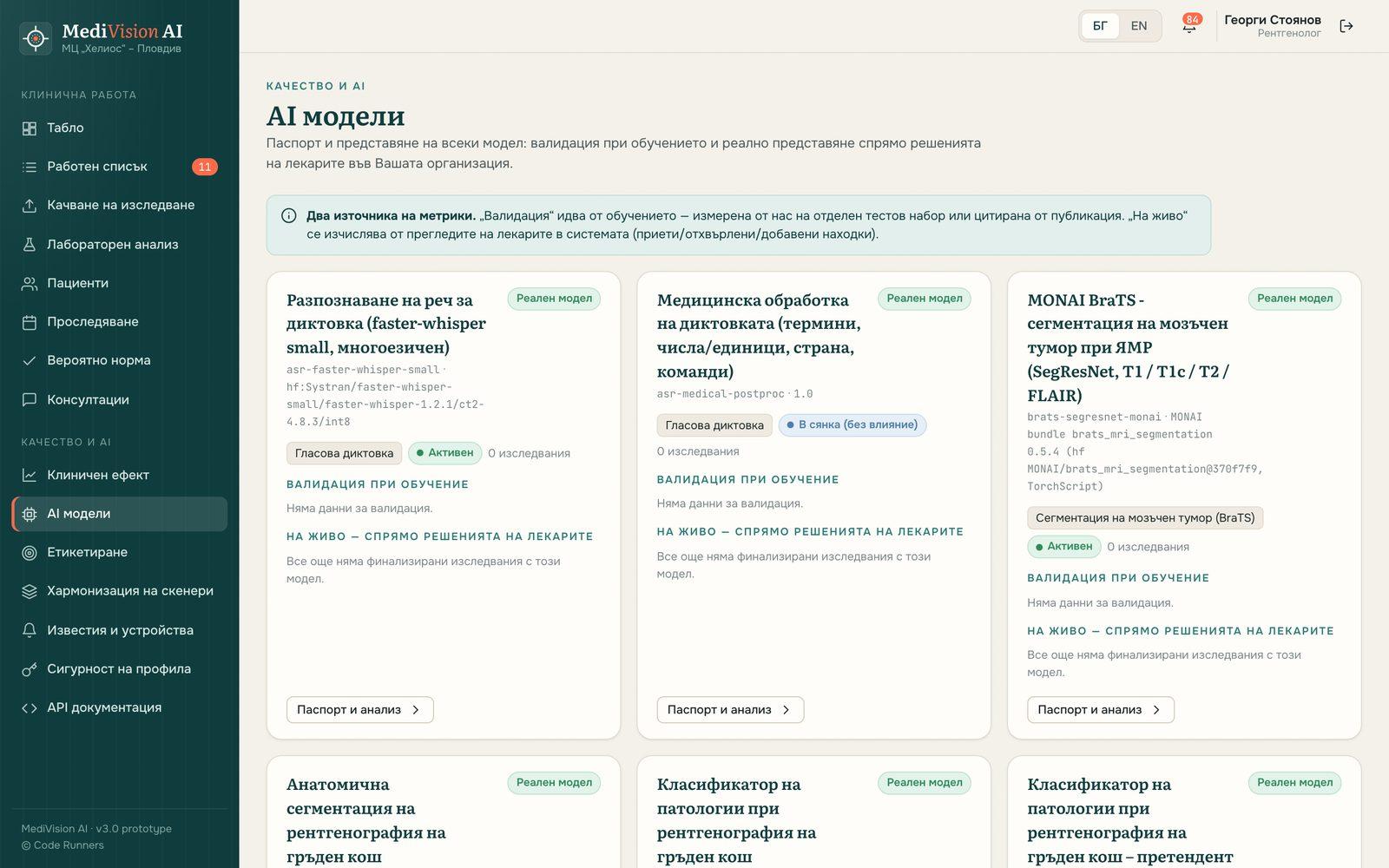
Screens from the working platform. All patients and organisations shown are fictional; the medical images come from openly licensed datasets.
Who It Serves
Built for every role in the diagnostic chain
Each user sees a workspace tailored to their responsibilities and permissions.
Radiologists
A prioritised worklist, an explainable viewer, one-click decisions per finding and reports that are already drafted.
Physicians
A dashboard of their patients, laboratory analytics, follow-up tracking and alerts when a critical finding arrives.
Laboratory Staff
Fast panel entry, CSV import and HL7 feeds with automatic reference ranges and clinical indices.
Clinic Administrators
Users and roles, alert routing, integrations and API keys, subscription plans, AI thresholds and the audit trail.
Platform Operators
Tenants, plans and revenue, the model registry, SLO monitoring and verification of the audit chain.
Patients
Plain-language results with a traffic light, their own uploads, doctor-review requests and video consultations.
Benefits
Why diagnostic services choose MedVision AI
The outcomes that matter for clinics, their teams and their patients.
Critical cases first
AI triage moves urgent findings to the top of the list and alerts the right doctor within seconds of upload.
A second reader on every study
Discrepancy detection between AI and clinician flags studies worth a second look before they are signed.
Less time on paperwork
Pre-drafted structured reports and one-click decisions cut reporting time without taking the decision away from the clinician.
Privacy by design
Identities are separated from images and encrypted; every access to personal data is justified and logged.
Measurable AI quality
Performance, drift and fairness are monitored continuously against clinician decisions and real outcomes.
Fits the existing hospital IT
PACS, laboratory systems, identity providers and reporting systems connect through standard protocols.
Trust & Compliance
Decision support, built with governance in mind
MedVision AI supports qualified clinicians; it does not replace a medical diagnosis and is not yet a certified medical device. Clinical validation with real-world data and CE marking under the Medical Device Regulation are the next steps on its roadmap. The architecture already provides what regulators ask for: human oversight on every finding, model versioning, performance monitoring and a complete audit trail.


The platform was developed under project BG16RFPR001-1.001-0114-C01 "Innovative platform for automated disease diagnosis using artificial intelligence and computer vision", implemented by Code Runners with support under the EU Programme "Competitiveness and Innovation in Enterprises" 2021–2027.
About our EU-funded projects →Built On
An architecture ready for clinical load
Stateless API instances, a durable job queue and an AI service with separate ingest and inference tiers scale independently; everything is monitored against SLOs.
See MedVision AI in action
Book a demonstration with your own anonymised studies and see how the platform fits your clinic, imaging centre or laboratory.